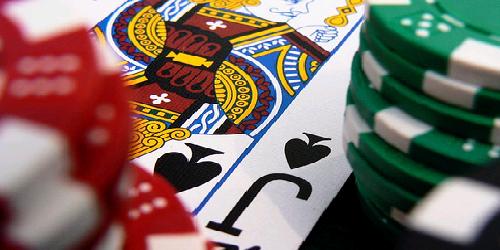
Casino tokens (also known as chips, checks or cheques) are small discs used in lieu of currency in casinos. Colored metal or compression molded clay tokens of various denominations are used primarily in table games, as opposed to metal token coins, used primarily in slot machines.
Some casinos also use gaming plaques for high stakes table games ($25,000 and above). Plaques differ from chips in that they are larger, usually rectangular in shape and contain serial numbers.
Although the first gambling house was legalised in Venice in 1626, actual poker chips as we know them now were still not used for over two hundred more years. Back in the 1800s and prior, poker players seemed to use any small valuable object imaginable. Early poker players sometimes used jagged gold pieces, gold nuggets, gold dust, or coins as well as “chips” primarily made of ivory, bone, wood, paper and a composition made from clay and shellac. Several companies between the 1880s and the late 1930s made clay composition poker chips. There were over 1000 designs from which to choose.
What the BPO lured top players over from the US whom had not played in the UK before, such as the current World Poker Champion Greg Raymer, Chris Ferguson, Phil Ivey and Howard Lederer and this in turn brought the BPO further exposure.
The inaugural BPO was eventually won by Adam Dujmovic, a semi-professional from Chicago whom after qualifying for the tournament online, collected a prize just shy of 100,000 pounds.
The success of the BPO 2005 inevitably bought along the BPO 2006 a year later. The 2006 version had a pot of 100,000 pounds to be won over 6 heats and a final. Noah Boeken collected around 56,000 pounds.
Though the World Series of Poker made its official debut in 1970, the idea of the Horseshoe's annual tournament was actually conceived more than two decades earlier.
In the summer of 1949, as the story goes, inveterate gambler Nicholas "Nick the Greek" Dandolos approached Benny Binion with an unusual request - to challenge the best in a high-stakes poker marathon. Binion agreed to set up a match between Dandolos and the legendary Johnny Moss, with the stipulation that the poker game would be played in public view.
During the course of the poker marathon, which lasted five months with breaks only for sleep, the two men played every form of poker imaginable. Moss ultimately won "the biggest game in town" and an estimated $2 million. When the Greek lost his last pot, he arose from his chair, bowed slightly, and uttered the now-famous words, "Mr. Moss, I have to let you go." Dandolos then went upstairs to bed.
Though significant in its own way as a chapter in poker history, the five-month marathon took on added importance to Benny Binion. He noted that the public had gathered outside the casino each day to watch the game with the fervor of dedicated sports fans, and he was amazed at the attention the event had attracted. But it wasn't until 1970 that Binion decided to re-create this excitement and stage a battle of poker giants - dubbed the "World Series Of Poker" - to determine who would be worthy of the title "World Champion." Some of the best players in the country were assembled, and Johnny Moss came out on top. The decision was democratic in that the champion was decided by popular vote.
The following year, the winner was determined by a freezeout competition, with players being systematically eliminated until one player had all the chips. Moss again was declared the World Champion. In 1972, when Thomas "Amarillo Slim" Preston won the title and went on the talk-show circuit, the WSOP began to gain a wider following.
It was only a year later that Binion participated in the Oral History Project at the University of Nevada-Reno and discussed the World Series with interviewer Mary Ellen Glass. "This poker game here gets us a lot of attention," he told Glass. "We had seven players last year, and this year we had 13. I look to have better than 20 next year. It's even liable to get up to be 50, might get up to be more than that." Binion then paused, and as if gazing into the future, prophesied, "It will eventually."
In the early 1980s, with the introduction of preliminary poker satellite competitions with lower buy-ins, Binion's prophesy came to fruition and the popularity of the World Series of Poker soared. But even Benny Binion, who passed away on Christmas Day of 1989, would have had difficulty foreseeing the enormous growth the Horseshoe's annual poker tournament has experienced in the past decade or so.
In 1982, nine years after Mr. Binion participated in UNR's Oral History Project, the tournament drew 52 entrants. Five years later, there were 2,141 participants, and the 2002 event attracted 7,595 entries. The prize money has increased proportionately, from $7,769,000 a decade ago to a staggering $19,599,230 in 2002. Whereas only 12 events, mostly Texas hold'em and seven-card stud, were scheduled as recently as 1988, the 2004 tournament offers 33 competitions that feature a wide variety of poker games.
Today, the legacy Benny Binion left the poker community ranks as the oldest, largest, most prestigious, and most media-hyped gaming competition in the world, and no doubt it holds the promise of an even brighter future. But equally important, The World Series of Poker has touched thousands of lives over the years, affording talented players the opportunity to follow their dreams, reach for the stars, and perhaps one day achieve greatness in their chosen endeavor.